
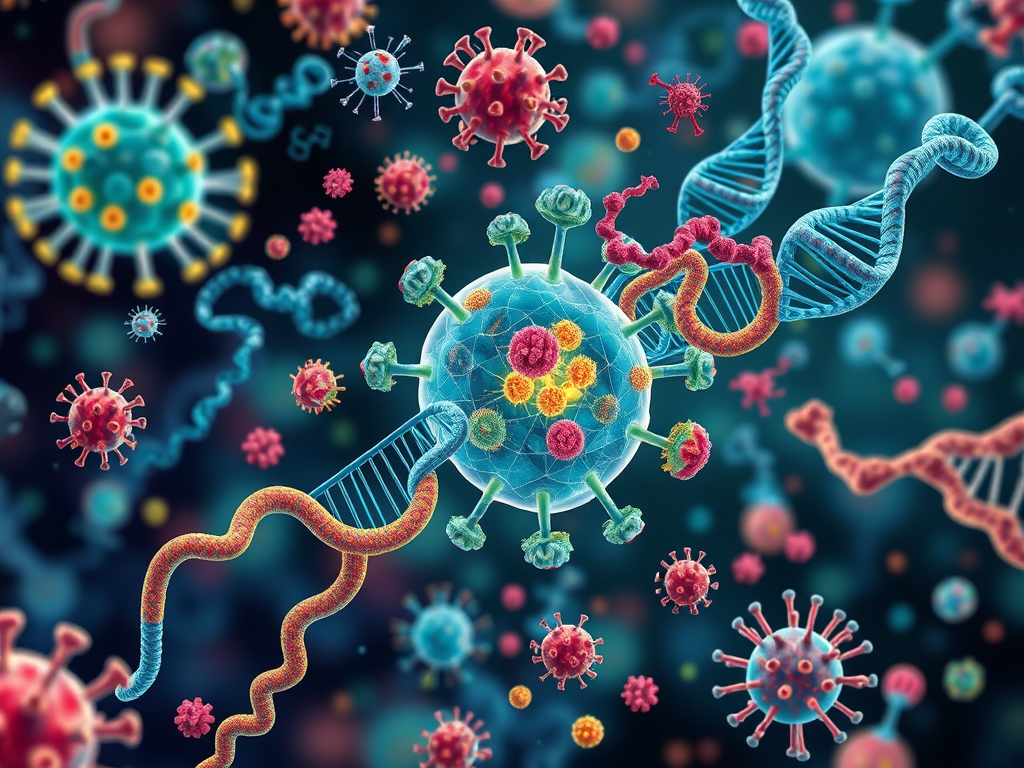
Are you excited about applying artificial intelligence to real-world biological problems? Do you want your research to directly contribute to animal health, disease prevention, and vaccine development?
Wageningen University & Research (WUR) is recruiting a PhD candidate for a cutting-edge project within its new Digital Biology investment programme. This programme drives the digital transformation of animal sciences by integrating AI, data science, and biological research across health, behaviour, and biodiversity.
About the Digital Biology Programme
This PhD is part of a larger initiative titled:
“Digital Biology – Integrating Behaviour, Health and Biodiversity in Animal Science.”
The programme consists of seven interconnected PhD tracks, jointly carried out by:
- Wageningen Bioveterinary Research (WBVR)
- Wageningen Livestock Research (WLR)
- Wageningen Marine Research (WMR)
- Wageningen University and the WIAS Graduate School
Together, the PhD candidates explore how digital technologies—including AI, sensors, modelling, and data fusion—can be used to better understand animal health and resilience.
A central concept of the programme is digital physiology: how behaviour, genetics, pathogens, immunity, and environmental factors interact to shape animal health and ecosystem function.
PhD Project: AI Tools for Disease Correlates of Pathogens
Despite decades of research, many complex pathogens circulating in livestock and wildlife still lack effective vaccines or intervention strategies. Understanding why some infections cause disease while others do not remains a major scientific challenge.
In this PhD project, you will explore AI-driven approaches to uncover correlates of disease and virulence by analysing pathogen proteins and their interactions with the host immune system.
Your work will help lay the foundation for future vaccine design and diagnostic assays.
Your Research Tasks
During your PhD, you will:
- Identify and implement AI-based tools to assess antigenicity, epitope accessibility, and immune-relevant protein structures
- Use protein structure and folding predictions to evaluate immunogenic potential
- Integrate genomic, proteomic, and structural data to generate ranked lists of candidate virulence-associated proteins
- Develop machine-learning models to predict which antigens are most promising as vaccine candidates or diagnostic targets
- Collaborate with experimental researchers to support in vitro validation of predicted proteins
This project offers a strong balance between computational innovation and biological relevance.
Research Environment and Supervision
You will be based at Wageningen Bioveterinary Research (WBVR) in Lelystad, embedded within the Adaptation Physiology chair group of the Animal Sciences Group.
The project is part of the Resilience of Animals research theme and is supervised by:
- Prof. Annemarie Rebel (promotor)
- Dr. Dirkjan Schokker (co-supervisor)
You will work in close connection with other PhD candidates across the Digital Biology programme.
Candidate Profile: Who Should Apply?
You are curious, analytical, and motivated to improve animal health using data-driven approaches.
Required Qualifications
- MSc degree in Data Science, Bioinformatics, Computer Science, Artificial Intelligence, Computational Biology, or Life Sciences with a strong data science focus
- Experience with programming languages such as Python and R
- Experience working with high-performance computing (HPC) environments
- Basic understanding of machine-learning concepts (classification, regression, cross-validation)
- Knowledge of statistics and applied machine-learning techniques
Personal Skills and Interests
- Strong interest in microbiology (viruses, bacteria) and host immune responses
- Ability to work in multidisciplinary teams
- Proactive, collaborative, flexible, and results-oriented mindset
- Motivation to combine AI methods with biological insight
English proficiency at CEFR C1 level is required.
Salary, Contract & Benefits
Wageningen University & Research offers excellent employment conditions under the Collective Labour Agreement for Dutch Universities (CAO-NU).
What You Will Receive
- Fully funded PhD position (38 hours/week)
- Gross monthly salary from €3,059 (year 1) to €3,881 (year 4)
- Initial 18-month contract, extended upon good performance
- Fixed 8.3% year-end bonus
- Excellent pension scheme
- Partially paid parental leave
- Flexible working hours and strong focus on work–life balance
- Tailored PhD training and personal development programme
Living and Working in the Netherlands
WUR is an internationally oriented university with a large global research community.
International PhD candidates receive support with:
- Visa and immigration procedures
- Housing, schooling, and partner job assistance
- Integration into the international WUR community
- Possible tax benefits for eligible staff during the first five years
How to Apply
Required Documents (max. 3 pages total)
- Curriculum vitae (CV)
- Motivation letter
- Application deadline: 19 February 2026 Applications must be submitted via the official WUR vacancy page.
Frequently Asked Questions (FAQ)
Is this PhD fully funded?
Yes. The position includes a full salary, benefits, and a structured PhD training programme.
Is this PhD suitable for computer science graduates?
Yes, provided you have a strong interest in biology and are motivated to work on biological data and problems.
Will I work with experimental data?
Yes. Computational predictions will be experimentally validated in collaboration with laboratory researchers.
Where will I be based?
The position is based in Lelystad, at Wageningen Bioveterinary Research.
Is prior experience in immunology required?
Basic affinity is expected, but in-depth expertise can be developed during the PhD.
Discover more from Agristok
Subscribe to get the latest posts sent to your email.