
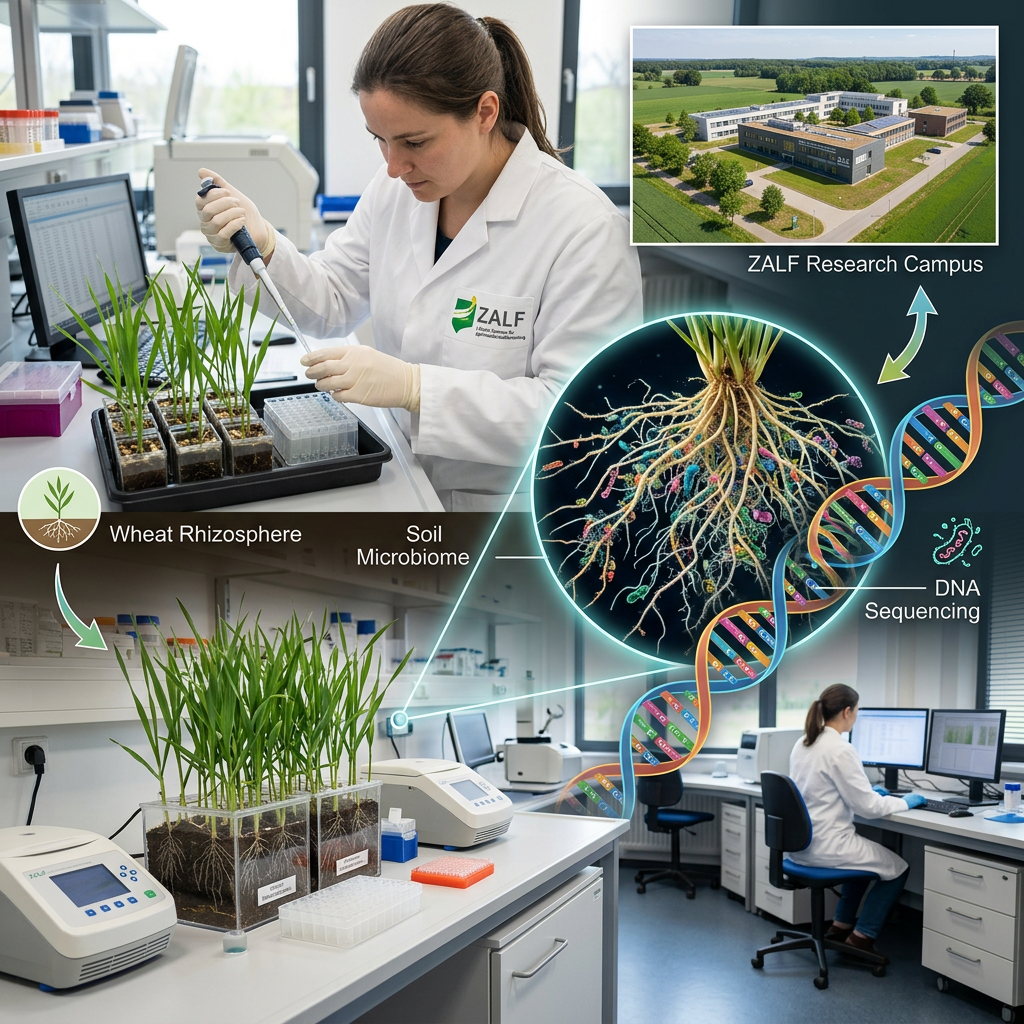
The Leibniz Centre for Agricultural Landscape Research (ZALF) is inviting applications for a fully funded Doctoral Scientist (PhD) position in the field of Plant Microbiome of Cereals. This three-year research opportunity is part of the DFG-funded project MicroResponS, which investigates how wheat microbiome functions respond to water stress and how fungicides influence these microbial communities.
The successful candidate will join ZALF’s Microbial Biogeochemistry group in Müncheberg, near Berlin, and will have the opportunity to pursue a doctoral degree through Humboldt University of Berlin. The preferred start date is 15 October 2026 or earlier. This opportunity stands out because it combines: Cutting-edge research on plant microbiomes Funding from the German Research Foundation (DFG) Training in metagenomics and bioinformatics Collaboration with leading German institutions Access to Berlin’s academic ecosystem A fully funded three-year doctoral pathway For candidates interested in microbial ecology and sustainable agriculture, this is a particularly strong early-career opportunity.
The Doctoral Scientist position in Plant Microbiome of Cereals at ZALF offers an excellent opportunity to conduct high-impact research at the forefront of agricultural microbiology. With DFG funding, international collaboration, and access to one of Germany’s premier agricultural research institutes, this position provides an ideal environment for launching a successful academic career in plant–microbe interactions and sustainable agriculture.
Quick Overview
- Position Title: Doctoral Scientist (f/m/d) in Plant Microbiome of Cereals
- Reference Number: 23-2026
- Host Institution: Leibniz Centre for Agricultural Landscape Research (ZALF)
- Location: Müncheberg, Brandenburg, Germany
- Nearby City: Berlin (approximately 35 minutes by regional train)
- Contract Duration: 36 months
- Employment Fraction: 65% position
- Salary: TV-L E13 (65%) plus annual bonus
- Funding Source: German Research Foundation (DFG)
- Project Name: MicroResponS
- PhD Degree Option: Humboldt University of Berlin
- Application Deadline: 31 May 2026
- Preferred Start Date: 15 October 2026 or earlier
About the Research Project
The MicroResponS project examines the resilience of wheat-associated microbial communities under drought conditions and evaluates how fungicides alter microbiome functions. The overarching goal is to understand how beneficial microbes support cereal crops under environmental stress and how agricultural management practices influence these relationships. This research sits at the intersection of:
- Plant microbiology
- Microbial ecology
- Agricultural biotechnology
- Metagenomics
- Bioinformatics
- Sustainable crop production
Your Research Responsibilities
As a doctoral researcher, you will:
- Design and conduct plant pot experiments using wheat and related cereal species
- Develop and apply meta-omics approaches to detect plant growth-promoting microbial traits
- Analyze microbial and ecological datasets
- Publish findings in international peer-reviewed journals
- Present results at scientific conferences
- Collaborate closely with project partners at the University of Applied Sciences Coburg and colleagues in the MicGeo team at ZALF
The project aims for at least two high-quality scientific publications during the three-year contract.
Academic Background and Skills Required
Applicants should hold a very good Master’s degree in a relevant discipline, preferably with a focus on:
- Plant microbiomes
- Plant–microbe interactions
- Microbial ecology
- Molecular biology
- Agricultural sciences
- Bioinformatics
Strong candidates will have:
- Knowledge of plant microbiomes and agricultural systems
- Experience in metagenomics or microbial ecology
- Proficiency in English
- Familiarity with ecological statistics and R programming
- Scientific curiosity and independence
- Excellent teamwork and intercultural communication skills
Research Environment
The successful candidate will join the MicGeo team within ZALF’s Research Area Landscape Functioning. ZALF is one of Europe’s leading agricultural research institutes and a member of the Leibniz Association. Researchers benefit from:
- Interdisciplinary collaboration across natural, social, and data sciences
- Access to advanced laboratory and sequencing facilities
- A dynamic and international work environment
- Strong scientific networks in soil and plant microbial ecology
Collaborating Institutions
The project is carried out jointly by:
- Leibniz Centre for Agricultural Landscape Research (ZALF)
- Coburg University of Applied Sciences and Arts
- Humboldt University of Berlin
A second doctoral researcher will work primarily in Coburg, creating opportunities for close collaboration.
Salary and Employment Benefits
The position offers:
- Salary according to TV-L E13 at 65% employment
- Special annual payment
- Company ticket for public transport
- Structured support for career development
- Access to high-level research networks
- Opportunity to earn a doctoral degree
Germany’s TV-L salary system provides a stable and competitive income for doctoral researchers, along with public-sector employment benefits.
Eligibility and Candidate Profile
This position is particularly suitable for applicants interested in:
- Plant microbiomes
- Wheat biology
- Drought stress responses
- Metagenomics and omics technologies
- Sustainable agriculture
Applicants should be motivated to work independently while contributing to collaborative research.
How to Apply
Applications should be submitted online or by email as a single PDF file (maximum 5 MB).
Required documents include:
- Curriculum Vitae
- Degree certificates and transcripts
- Proof of qualifications
- Additional supporting materials
- Reference number 23-2026 must be included in the application.
- APPLY NOW
Application Deadline
31 May 2026 Applications submitted after the deadline may not be considered.
Contact Information
For scientific questions about the position, contact: Prof. Dr. Steffen Kolb
Email: Kolb@zalf.de
Frequently Asked Questions (FAQs)
Is this PhD position fully funded?
Yes. The position is funded by the DFG and includes a salaried employment contract at TV-L E13 (65%).
What is the application deadline?
The deadline is 31 May 2026.
When does the position start?
The preferred start date is 15 October 2026 or earlier.
Is German language proficiency required?
No specific German language requirement is listed. Very good English skills are essential.
Can international applicants apply?
Yes. ZALF welcomes applications regardless of nationality or background.
What programming skills are useful?
Experience with R and bioinformatics tools is highly advantageous.
Will I earn a PhD degree?
Yes. The doctoral degree can be pursued through Humboldt University of Berlin.
What is the contract duration?
The contract is for 36 months.
What type of research will I conduct?
You will work on wheat microbiomes, drought resilience, and meta-omics analyses.
Where is ZALF located?
ZALF is located in Müncheberg, about 35 minutes from Berlin by train.
Discover more from Agristok
Subscribe to get the latest posts sent to your email.