
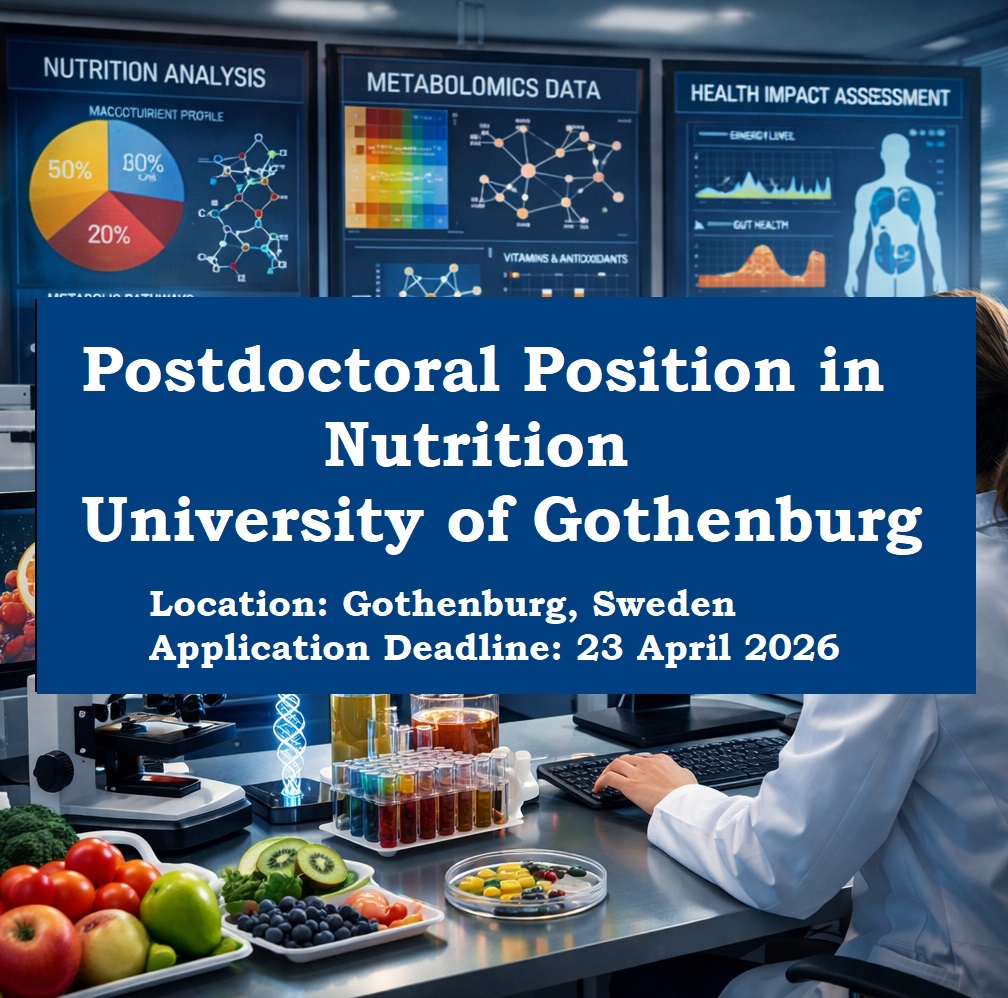
For researchers aiming to advance their careers in nutritional science and data-driven health research, this postdoctoral opportunity offers a highly specialized and impactful pathway. Combining metabolomics, machine learning, and clinical collaboration, the role places you at the center of cutting-edge dietary research in Sweden.
Gothenburg offers a high quality of life, combining a vibrant cultural scene with access to nature. The university provides extensive support services for international researchers and their families, making relocation smoother and more accessible. This postdoctoral role combines: Real-world clinical collaboration. Advanced metabolomics technologies. Machine learning applications in nutrition. Access to large, high-quality datasets. It is particularly suited for researchers aiming to build a strong publication record while developing advanced analytical expertise.
About the University and Research Environment
University of Gothenburg is one of Scandinavia’s largest academic institutions, hosting approximately 58,000 students and 6,800 employees. Known for its interdisciplinary approach, the university plays a key role in addressing global health and societal challenges.
The position is based at the Department of Internal Medicine and Clinical Nutrition within the Institute of Medicine. Research here spans multiple clinical and biomedical domains, including:
- Endocrinology and cardiometabolic health
- Gastroenterology and hematology
- Respiratory and allergy research
- Clinical nutrition and metabolism
The department collaborates closely with major healthcare institutions such as:
- Sahlgrenska University Hospital
- Mölndal Hospital
- This integration ensures strong clinical relevance and access to high-quality patient data.
Research Focus: Nutrition and Metabolomics
The subject area of this postdoctoral role is nutrition, with a strong emphasis on understanding how dietary patterns influence human health. Key research themes include:
- Cardiometabolic disease prevention
- Biomarkers of dietary intake
- Dietary composition and metabolism
Major Research Projects
1. Baritone Study: Focuses on identifying biomarker patterns that reflect habitual dietary intake, particularly:
- Protein sources
- Fruit and vegetable consumption
- This involves controlled dietary interventions and metabolomics analysis using mass spectrometry.
2. VOV Study (Vegan–Omnivore–Vegetarian)
Examines metabolic differences between dietary groups using:
- Blood metabolite profiling
- Detailed dietary intake records
- NMR-based metabolomics data
The current phase expands into:
- GC-MS (gas chromatography–mass spectrometry)
- LC-MS (liquid chromatography–mass spectrometry)
- Analysis of ~2,000 metabolites (identified and unidentified)
Role and Responsibilities
As a postdoctoral researcher, your primary focus will be advanced data analysis using modern computational approaches.
Core Responsibilities
- Analyze large-scale metabolomics datasets
- Apply multivariate statistical methods
- Use machine learning to identify dietary biomarker patterns
- Integrate laboratory data with dietary intake records
- Publish findings in peer-reviewed scientific journals
- Contribute to supervision of Master’s students
This role is ideal for researchers who enjoy working at the intersection of biology, data science, and public health.
Eligibility Criteria
To qualify for this position, applicants must:
- Hold a PhD in a relevant field such as:
- Biostatistics
- Medicine
- Biomedicine
- Epidemiology
- Nutrition
- Have completed the PhD within the last three years (with exceptions for special circumstances such as parental leave or clinical service)
Required Skills and Experience
Candidates should demonstrate:
- Strong experience in big data analysis related to health outcomes
- Proficiency in statistical modeling and machine learning
- Ability to work independently and collaboratively
- Structured and detail-oriented research approach
- Strong communication skills in scientific writing
Preferred Qualifications
The following will strengthen your application:
- Experience with dietary biomarkers
- Background in metabolomics data analysis
- Prior work with nutritional epidemiology datasets
Personal attributes such as professionalism, adaptability, and a positive research mindset are highly valued.
Employment Details
- Position Type: Fixed-term postdoctoral appointment
- Duration: 24 months
- Workload: Full-time (100%)
- Location: Gothenburg, Sweden
- Start Date: By agreement
- Reference Number: PAR 2026/303
- Application Deadline: 23 April 2026
Salary is individually negotiated according to university standards.
Application Process
Required Documents
- PhD certificate (or proof of completion before hiring decision)
- Published papers or manuscripts demonstrating:
- Nutrition research experience
- Quantitative data analysis expertise
- Applicants must submit their application via APPLY NOW.
- Application Deadline: 23 April 2026
Ensure all documents are complete before submission.
Contact Information
- Prof. Anna Winkvist – anna.winkvist@nutrition.gu.se
- Dr. Helen Lindqvist – helen.lindqvist@gu.se
- Hanna Augustin – hanna.augustin@gu.se
Frequently Asked Questions (FAQs)
1. Is this postdoctoral position funded?
Yes, this is a fully funded 24-month position with a competitive salary based on individual assessment.
2. Can international researchers apply?
Yes. The University of Gothenburg actively welcomes international applicants and provides relocation support resources.
3. What programming skills are required?
Experience with statistical and data analysis tools (such as R or Python) is highly beneficial, especially for machine learning applications.
4. Is prior experience in metabolomics mandatory?
Not strictly mandatory, but experience with biomarkers or metabolomics data significantly strengthens your application.
5. Will I have teaching responsibilities?
Teaching is not the primary focus, but supervision of Master’s students may be included.
6. How competitive is this position?
Highly competitive. Strong publications, relevant technical skills, and demonstrated research independence are key advantages.
7. Are there opportunities for career advancement?
Yes. The position supports publication, networking, and skill development, all essential for future academic or industry roles.
Discover more from Agristok
Subscribe to get the latest posts sent to your email.